


Training Master Series
Being Better Matters!

1. Elaine Biech 伊莱恩·碧柯
The leaders of tomorrow are going to have to have very different skills. They are going to have to be very focused on the mission-critical roles, but they also need to think about creating value through an ecosystem…The leader is going to have to pay attention to the organization both globally as well as locally.
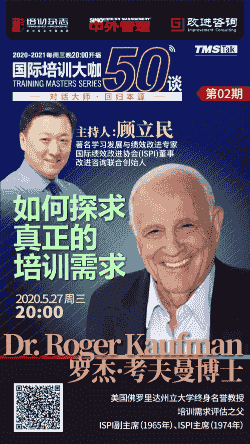
2. Roger Kaufman 罗杰·考夫曼
The word, need, got co-opeted by Abraham Maslow when he talked about his Hierarchy of Needs. He and I had an interesting conversation. I said, “Abe, you don’t have a hierarchy of needs…You have a hierarchy of motivators.

3. Bob Pike 鲍勃·派克
We could probably take a lecture-based program and reduce the time it takes to deliver it by 30% by putting participation in it. A lot of times, people make the argument: “well, I can’t let people participate because I have too much to cover.”…Is the goal covering everything, or is the goal to building competency so that they are doing things differently when they go back on the job.
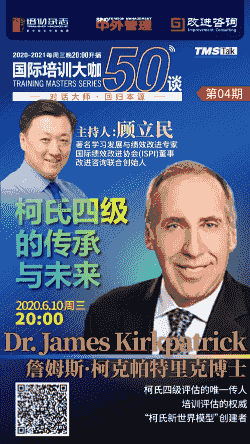
4. Dr. Jim Kirkpatrick
吉姆·柯克帕特里克
Level 3 is hard work…and also, it brings up unfavorable data sometimes, and sometimes senior leaders are saying, “You’re making me look bad.”…We believe that evaluation has to be about the truth, uncovering what’s working and what isn’t for the sole purpose of mAaking improvements, but not to make people look bad.

5. Dr. Roger Addison 罗杰·爱迪生
Most of the [HPT-related] models have similarities, and guess what? The similarities are RSVP [Focus on Results, Take a Systems viewpoint, Add Value, and Establish Partnerships]…All models are useful, and all models are wrong. They all have context…they all have their flaws.
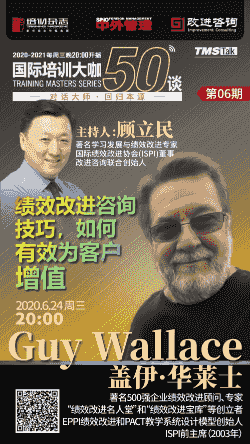
6. Guy Wallace 盖伊·华莱士
Most of the [HPT-related] models have similarities, and guess what? The similarities are RSVP [Focus on Results, Take a Systems viewpoint, Add Value, and Establish Partnerships]…All models are useful, and all models are wrong. They all have context…they all have their flaws.
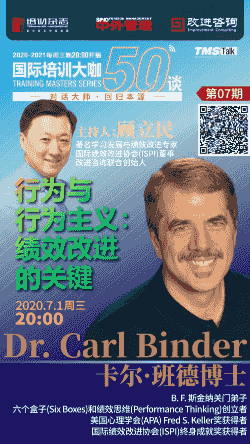
7. Dr. Carl Binder 卡尔·班得
Most of the [HPT-related] models have similarities, and guess what? The similarities are RSVP [Focus on Results, Take a Systems viewpoint, Add Value, and Establish Partnerships]…All models are useful, and all models are wrong. They all have context…they all have their flaws.
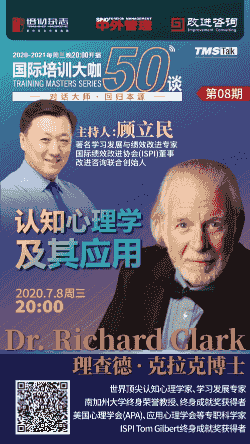
8. Dr. Richard Clark·克拉克
If you train people wrong, you could make them less knowledgeable after training about that topic than they were before they started. I showed evidence from 70 different studies where bad training actually produce people who knew less. Their post-test was lower, significantly, than their pre-test in the training…This, to me, is an argument for being very careful when we train because we think we can’t do any damage, but in fact, we can. Because we don’t carefully measure what people are able to do before and after, we don’t know when it happens.
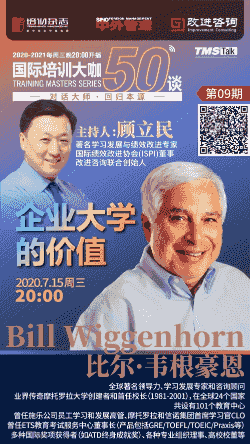
9. Bill Wiggenhorn 比尔·韦根豪恩
The corporate university has to be seen as an asset of the company, just like your R&D labs are an asset, that you would deploy with your strategy forward. The university is also your link, as a company, to this formal universities in your country, which are part of your supply chain of talent. It gives you a way to communicate and test things with the engineering schools and business schools…It also gives you a way to impact the curriculum of some of these institutions so that they are more aligned to what business needs rather than academic research.

10. Dr. Ruth Clark 露丝·克拉克
From the environment, we get words, sounds, visuals coming into our memory. Then the working memory processes it, hopefully to be stored in long-term memory. It’s very important that we can retrieve that at a later point. Sometimes, we’re going to bypass memory – like YouTube. I don’t really care to learn everything about a repair, but I could just watch that thing, and I can go do it. Tomorrow, I probably couldn’t do it again. [The video] is just a performance support at the time. But that’s also a form of learning. It’s more temporary. Maybe you don’t keep it in your long-term memory.
Training Master Series
Being Better Matters!
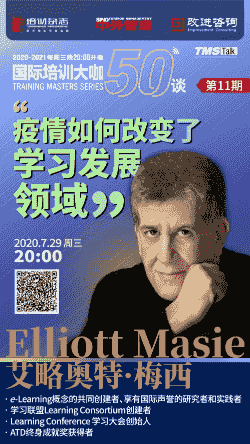
11. Elliott Masie 艾略奥特·�梅西
Learning needs to be sensitive to and respond to and be aware of the other issues that are in the lives of our employees…Right in the middle of the pandemic, we had some very horrible murders of black people and protests that have started all around the country on racial injustice. In the learning field, you can’t ignore that…It’s part of the reality.
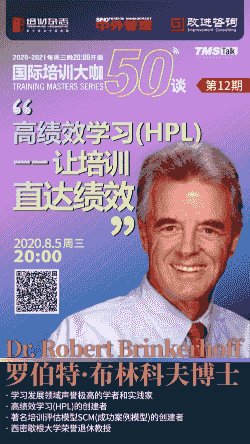
12. Dr. Robert Brinkerhoff
罗伯特·布林克尔霍夫
The difference in impact was not due to the training itself. It was due to what happened before the training and what happened after the training. For example, if a company was making sure that managers were engaged with the training participants, they began getting much better results than in companies where there was no manager engagement.

13. Dr. Robert Branson
罗伯特·布兰森
The idea of change management – I can say it in a nutshell: If you are going to change an organization, you better $(@&%* well get all the people who are going to be affected in the room at the same time or else you are going to face resistance.
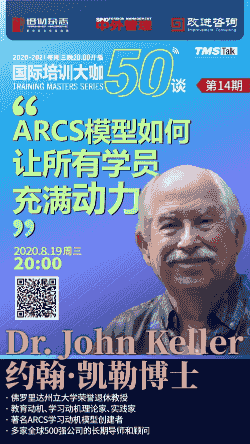
14. Dr. John Keller 约翰·凯勒
The goal is to make the student want to learn as opposed to the traditional behavioral psychology approach, which is just to provide external rewards, external stimuli, external environment to promote learning. But, the ARCS Model focuses more on what are the internal dimensions, internal dynamics that lead to a desired level of motivation.

15. Dr. Harold Stolovitch
哈罗德·斯托洛维奇
Technology is really the application of scientific knowledge to resolve or to achieve practical ends. If you want to achieve practical ends using science, then you have a technology. The key elements is that there is an outcome – an outcome that is valued…Often, we get confused because the outcome of many technological advances turn out to be things – objects…We, as technologists, need to rely on science to lead the way for us – to be the basis.

16. Dr. Michael Allen 迈克尔·艾伦
When the Society, ISPI, promotes HPT, they need to present it as something that is more holistic – more of the systems view, and more of all the variables, not just knowledge and skills. And not just the “human,” because the human has to work the environment. You can dig a canal using a shovel or a bulldozer. What tools do we have for the people so that they can do a better job – a higher quality job at a lower cost? We need to have the broadest view. Otherwise, we are going to help our client invest money in the wrong things.

17. Dr. Nancy Burns 南希·伯恩斯
We have to remain flexible. As we seen the affect on the world and the pandemic…, we have to be able to continually be able to reinvent ourselves because we don’t know what is going to happen next…We really have to focus on business…to look at what organizations need to be successful and to create the proper return on investment is extremely important.
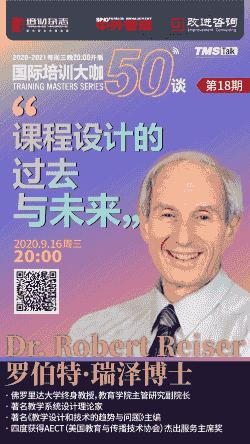
18. Dr. Robert Reiser 罗伯特·瑞泽
I’m a little concerned that people will get so caught up with the media that they forget about the nature of the instruction that needs to be presented by that medium. I think I see, unfortunately…, that the programs in America that teach instructional design – that teach instructional technology, there is much more emphasis on the medium and much less emphasis on carefully designing the instruction that’s to be delivered by that medium.
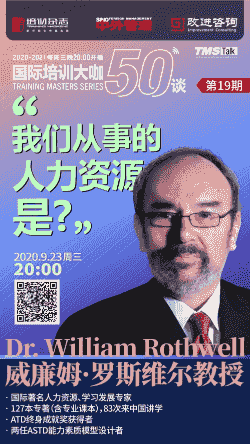
19. Dr. William Rothwell
威廉姆·罗斯维尔
When we call the field “training,” we imply what the trainer should do, what the learner should do, and the role of the training department in the company. So, words matter because they frame our beliefs our perceptions, our expectations…There was a big difference between the first competency study in 1978, which called the field training, and the 1983 study that called the field Human Resource Development.
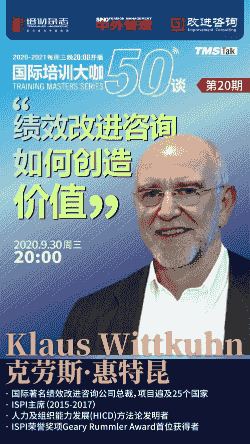
20. Klaus Wittkuhn 克劳斯·惠特昆
Attribution error tells us [that] much of the behavior of people does not depend on internal traits, but it results from people adapting to their environment. So, it is environment factors that influence the behaviors of people.
Training Master Series
Being Better Matters!

21. Dr. Judy Hale 朱迪·赫尔
I’m still a believer at looking at human performance because we’re still making the decisions about what technologies we use, when we use technology, how things are going to work. The reason that people are going to “performance improvement’ (dropping the “H”) doesn’t mean that they are dropping the human side. They are also including things like technology and whether or not it is efficient; whether technology is really working.
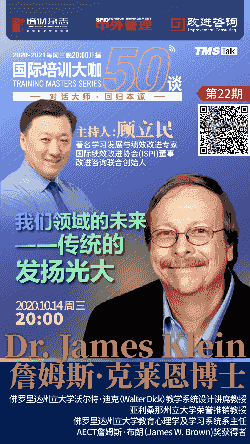
22. Dr. James Klein 詹姆斯·克莱恩
To me, the best definition of “technology” is processes and tools to help humankind. We have processes, and we have tools. Those tools are used to advance learning and performance – individual and organizational learning and performance.

23. Dr. Jack Phillips 杰克·菲利普斯
Someone might ask us, “What was our contribution of Learning & Development last month, or last quarter, or last year?” We often say that we trained these many people, and this is how long they were involved in the training, and this is how much we invested in the training. But see, that’s not contribution. That’s input…So let’s don’t disguise our inputs as outputs because it is what’s coming out that is important.
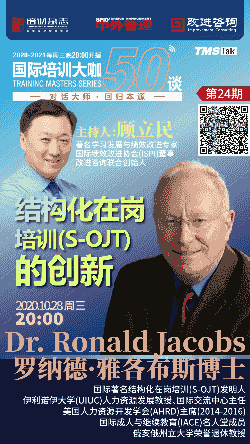
24. Dr. Ronald Jacobs
罗纳德·雅各布斯
HRD is about change. It is a process that seeks to implement change in some way whether it be individual learning or organizational change. “Management” has to do with continuity and stability. Management is about ensuring that the organization is adhering to its policies. The people that are attracted to HRD tend to be people who are more interested in making something different. HR people tend to be people that want to maintain the current state…That’s an unfair characterization, but I have that impression from meeting so many people over the years.

25. Dr. Jeanne Anderson
基尼·安德森
One of the big keys to being a really good instructional designer is being aware of the mission and strategies of your organization so that training programs developed will enhance the performance of the employees’ productivity and competitiveness of the business. It’s not sufficient to know your model. You need to know your business as well.

26. Dr. Marcy Driscoll 马西·瑞斯克尔
One of the absolute foundational sets of principles for the [instructional systems design] field is going to be one of the things that going to be critical for the future, and that is the systems perspective…The systems perspective requires you to look at learning and performance within a system.

27. Dr. Karen Watkins
凯伦·沃特金斯
Organizational development is about system-wide change. You work from the group up. Training and Learning & Development are individual-focused (what you need to build your capacity). In OD, your job is to be much more strategic and focused on the vision of the organization, its mission, what it is you need to do to enhance it, and to create high-levels of organizational performance…My work is focused on what are the dimensions you need to pay attention to in order to build a healthy organization.

28. Lynn Kearny 琳·科尼
[Defining Visual storytelling] Visual is something that you can look at. It is not only pictures. It is also words. It may be geometric shapes. It may be areas of color…anything that your eyes take in and notice…[Storytelling] is a sequence of related events that matter. It would be a narrative. Something that you can tell or you can show in a series of pictures or both.

29. Margo Murray 马果·穆雷
[Defining mentoring] It is used very casually and misused when people often are really calling a mentor what is actually a role model – someone that they look up to but there is no agreed relationship. [Mentoring] is a deliberate pairing of a more skilled or experienced person with a lessor skilled or experienced person, and the agreed upon goal is that those skills and experiences will be transferred. Often, that transfer is both ways.

30. Dr. Gregory Sales
格里高利·塞尔斯
Doing a gap analysis depends on the environment that the education or training is going to take place. Sometimes, the gap is apparent…In other situations like trying to increase the effectiveness of the salesforce. You got people out there selling, and maybe they’ve been sales people for a long time, but they aren’t hitting their numbers the way you would like them to…Then you have to figure out what is limiting the number of sales that they are bringing in…You have to look at [the problem] from a lot of different directions to figure out what is the cause of the gap…What is the perceived problem and trying to determine if that is the real problem or if there is another problem that is causing the deficiency.
Training Master Series
Being Better Matters!

31. Dr. Victoria Marsick 维多利亚·马斯克
We know from neuroscience that we have selective attention. All of us pay attention to some things and don’t see other things in every situation that we encounter. Intentionality is explicit, like I set a goal, and I go after a certain kind of thing. We also have internationalities that are in the background that maybe we don’t think about all the time. They guide us in one direction or another. Informal learning means that you notice things, so our attention is directed to things that we are looking at for one reason or another even though that reason might not be completely clear to us. So I think that there is a level of intentionality around informal learning.

32. Dr. Will Thalheimer 威尔·陶尔海默
We sometimes don’t think about how to set up long-term memory so that it works for us. One of the tricks is that we want to think about how the human brain works. The human brain is very reactive. In other words, if it sees something in a room, it may react to it. If it doesn’t see it, we’re not going to react to it. Our thoughts and actions are triggered by contextual queues. When we want to set up long-term memory, we want to make sure that the contextual queues are recorded in memory…The key is you give people real-world, realistic examples. You give them realistic practice. You put them in a real task situation. You make them make decisions like they are going to have to make on the job instead of just throwing information at people.

33. Dr. Fernando Senior
费尔南多·斯尼奥尔
A job aid is a summary of issues to be considered when performing a task. Unfortunately, we are in the habit – especially in training departments – that every problem requires training. That’s not true. [Robert] Mager taught us this: You have to analyze what’s the real problem here. Maybe people don’t have the right technology. Maybe no one told them what they are expected to do. Maybe there’s peer pressure not to do a good job because maybe you are going to make everyone else work harder. If you need training, do you really need a full-time training process or just a reminder of steps?…You can build job aids to help people have a mental model of how to navigate in a scenario.

34. John Lazar 约翰·拉泽
Coaching is never about giving the client the answer. It’s about supporting the client to come to their own answer. [There are] two important byproducts of coaching. One is self leadership and the other one is personal responsibility. You don’t get to that, especially the second one, if you are telling people what to do…

35. Dr. Patti Phillips 帕蒂·菲利普斯
We have two purposes of evaluation. Demonstrate that we are doing the job that we set out to do and adding value, but the other is process improvement. You are using data to fix the bugs. That’s the whole point of it. Too often, evaluation is an afterthought, but more than that, it is just another activity. If that’s how we are going to treat [evaluation], don’t do it. You have other things to do than add another activity on top of all the other activities.

36. Belia Nel 比利亚·奈尔
As a result of lockdown, people cannot attend physical workshops and training programs. Everybody quickly became experts in Zoom and quickly had to design how to deliver training and write in an eLearning and virtual learning mode…[eLearning] is becoming a big ask in South Africa.

37. Dr. Darlene Van Tiem 达琳·婉婷
When we use acronyms, for a lot of countries, it becomes a foreign language. They have to remember “What’s this acronym? What’s that acronym?” We don’t even need acronyms. Many times, we can engineer a sentence so it doesn’t need an acronym.
I try to use what I call pre-translation English. To me, it is English that can be machine translated in another language, but I don’t simplify terminology. I use the real terms and the real applications. It’s in the structure of the sentences.

38. Magda Mook 麦格达·慕克
The model of leadership is very different these days. It calls for self-awareness. It calls for empathy. It calls for inclusion.
Coaching is extremely potent and useful methodology for individuals to learn their own strengths, to manage some shortcomings, and how they relate to other people who they are working with. Coaching allows an individual to seek responses to their own questions. It allows them to get to know themselves much better. By doing that, they can be more alert and assertive in a way but also more aware leader for their organizations.

39. Dr. Roz Tsai 蔡本红
The purpose of strategy is (1) to create clarity but (2), very importantly, is to create a firm set of guidelines for saying no to other things. If you find yourself running in all directions trying to serve all kinds of demands, you’re at risk of becoming an order-taker…All of a sudden you are spread so thin that you are not focusing on what is really important to the business. Let’s be honest: Every learning activity is a distraction to the day-to-day work. The more learning that you produce for the organization, the more distraction that you might create. That also comes at an opportunity cost for what the organization is trying to accomplish. This is what strategic alignment means: Get clear about what the company absolutely has to accomplish, and then put your heaviest emphasis on that. Put your best talent on that so you help the organization accomplish that. Along the way, you may have to say no to other interesting projects that you want to do.

40. Dr. Clark Quinn 克拉克·奎恩
Many times, particularly when things are changing so fast that if you learn it and it would soon be out of date, it doesn’t make sense to try and put it in the head. Put it in the world. Let you look it up. That, to me, is more performance support…A mobile device is a wonderful way to bring information to people so that they can look it up, get going, and not have to remember it.
Training Master Series
Being Better Matters!

41. Alex Salas 亚历克斯·萨拉斯
You want to build job aids for things I don’t usually do, but they are important. If you give me a course on how to do a customer-service refund, and I pass the quiz. You think, “Hey, this guy’s trained. He’s ready to go.” I don’t have to do a refund until four weeks later. We already know, since the 1900s, Thorndike gave us the Law of Exercise. If you don’t use it, you lose it. So, four weeks later, I know that I took that training, but how do I do that again? There are like 15 steps involved with that. How do I know what step 12 is or steps 12 to 15? That’s where you need job support material. You don’t need a course. You don’t need training. You just need a job aid.
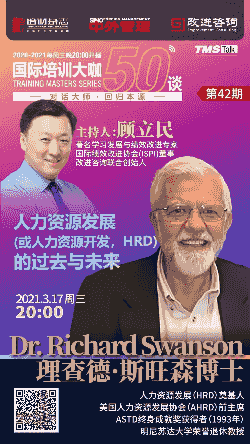
42. Dr. Richard Swanson 理查德·斯旺森
What we do is almost always embedded in a host system (a company or organization). Those three legs create some tension between them…We could implement these things and do things that weren’t ethical. The tools that we have are very powerful for changing people and for changing organizations, and it could be done for both good or bad.

43. Donald Clark 唐纳德·克拉克
Leadership is a construct of L&D (Learning & Development). We invented leadership, and we forced it on people through courses…It is misleading because it gives people a false view of their role in an organization: they are the leaders and everyone has to follow them. How many books have you seen with an adjective in front, “Social Leadership” [or] “Charismatic Leadership.” There’s hundreds of [leadership] books. There’s no solid theory in the [leadership] area. It’s really people writing books for the sake of writing them a lot of the time…It gives L&D a false sense of their own importance.
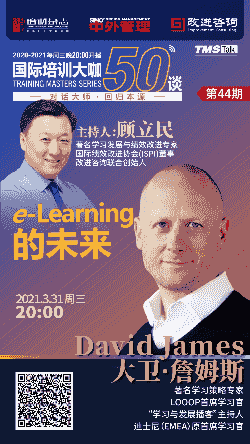
44. David James 大卫·詹姆斯
Learning & Development is very much used to top-down system implementation where one system and one suite of content will be the answer. The only problem with that is, if that is the answer, what is the question? The only question that solves is how do we get one system filled with content to people? It completely ignores the needs of all individuals. How about it if we think about it a different way? We think, what is a critical point of failure within our organization that needs immediately to be addressed and who specifically is accountable or responsible for the performance and results and work with them? The only way to do it is by understanding people, tasks, expectations, and the reward levers.

Dr. Patti Shank 帕蒂·尚克
Learning on mobile devices has all kinds of cognitive load challenges. We know that with mobile devices, people are usually mobile. They’re moving, and there’s noise, there’s things going on around them, and there’s connectivity problems. If [instructional designers] just remember a time when they were watching, say a movie or YouTube video, and things are going on around them, they couldn’t remember what they just saw. Learning takes a lot of mental effort. Watching a movie takes a lot of mental effort. So, if they remember a time in which they tried to watch something on a mobile or watch a movie at home and the children behind them were screaming, running around, and there was lots of noise, they will understand that it is very hard to learn when there’s other things going on.

Dr. Gary Depaul 盖瑞·德保罗
We will ask some questions about leadership, such as the definition of leadership and management, the difference and connection between them, the shortcomings of traditional leadership, and the 7 secrets of leadership, etc.
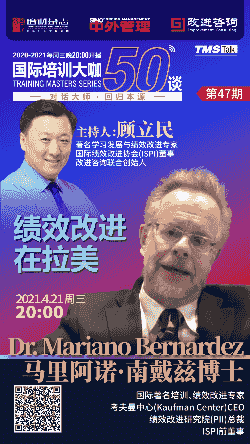
Dr. Mariano Bernardez
马里阿诺·博南戴兹
We will ask many questions about international training, especially in Latin America, including, what is training and performance improvement like in Latin America? How does Dr. Roger Kaufman's Mega Thinking create value for Latin American countries?
What is the Roger Kaufman Award?
Dr. Tim Brock 蒂姆·布劳克
Can training be evaluated? Why should a business leader believe in the ROI of training? And what exactly is performance analysis, etc.

Dr. John Turner 约翰·特纳
The new invention he brought us is the Flow System. So what exactly is the Flow System? What value
does it create for us? How to do it?
Dr. David Ulrich 戴维•尤里奇
Breakthrough and transformation from the three pillars of HR to performance improvement.


